What Happens in Your Child’s First ADHD Coaching Session?
ADHD coaching is practical, collaborative, and nothing like a school lesson. Here is what typically happens from the first contact through to an ongoing coaching programme — so you and your child know what to expect.
Before the First Session: The Intake Process
Most coaches begin with an intake consultation, usually with parents, to gather background information. You will be asked about your child’s diagnosis (if they have one), their main difficulties, what has already been tried, and what you most want to change. This helps the coach understand your child’s profile before meeting them and ensures the sessions are targeted from the start.
It is helpful to bring any relevant reports — an ADHD assessment, EHCP, or school provision map — though these are not essential. The coach will form their own understanding through the process.
Meeting the Child
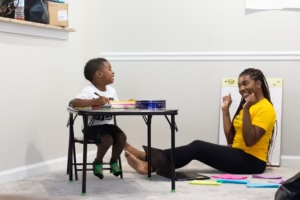
For younger children, the first session often involves parents too. For older children and teenagers, the coach will typically want to meet one-to-one fairly quickly, as the coaching relationship is most effective when the young person feels ownership over the process. The first session with your child is usually spent getting to know each other, exploring what the child themselves finds difficult, and beginning to identify what they most want to change.
Good ADHD coaches are warm, non-judgemental, and genuinely curious about your child’s perspective. They do not lecture or give homework in the traditional sense — they collaborate with your child to identify small, manageable actions that feel achievable.
Setting Goals
Early sessions involve setting clear, specific goals — not vague aims like “be more organised” but concrete targets like “have my school bag packed the night before” or “start homework within 20 minutes of getting home three times this week”. ADHD coaching works best with measurable goals that your child has chosen, because internal motivation is far more powerful than external pressure for a child with ADHD.
A Typical Ongoing Session
After the first few sessions, a regular pattern is established. Each session begins with a brief check-in: what happened since last time, what worked, what got in the way. The coach and child then work on one or two focus areas — troubleshooting a strategy that did not work as planned, practising a new tool, or preparing for an upcoming challenge. The session ends with your child identifying one specific action to try before next time.
Parent Involvement
Parents are usually involved through brief check-ins rather than sitting in on sessions. This protects the coaching relationship — your child needs to feel safe to be honest about what is not working, including things that might be going on at home. The coach will keep you informed of themes and progress and flag anything that needs your input.
You might also like