
How to Get a Speech and Language Assessment in Birmingham
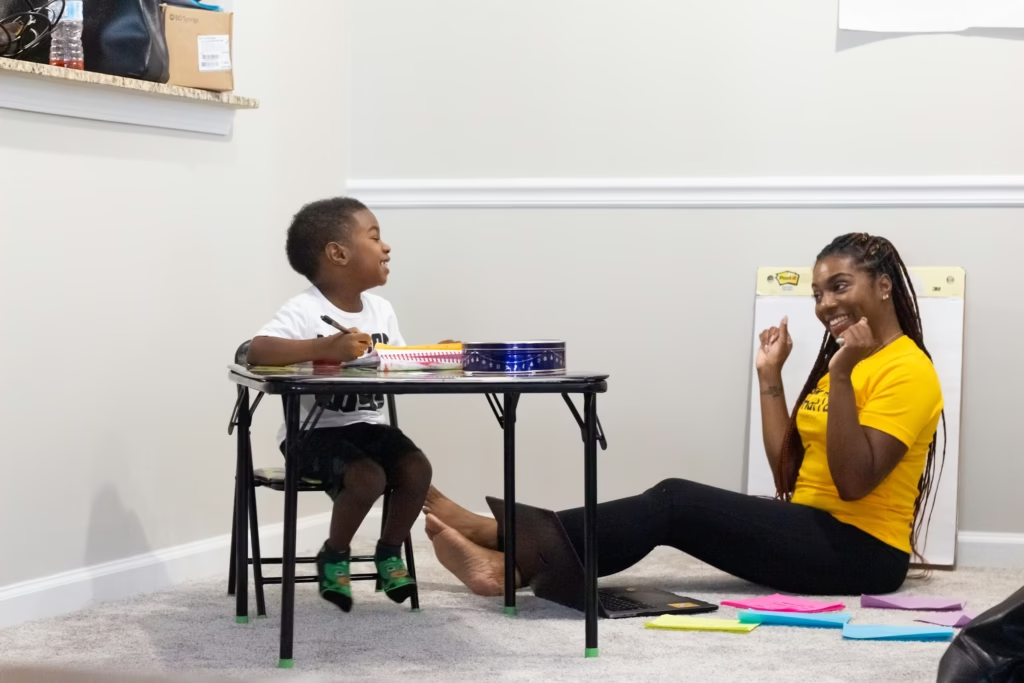
If you are worried about your child’s speech, language, or communication development, getting a speech and language assessment is one of the most helpful steps you can take. An assessment gives you a clear picture of where your child is right now, what is going well, and where they might benefit from some extra support.
This guide explains how speech and language assessments work in Birmingham, how to access one through the NHS, and what to do if you want or need to access an assessment privately — without a long wait.
What Is a Speech and Language Assessment?
A speech and language assessment is a structured evaluation carried out by a qualified speech and language therapist (SLT). It looks at how your child communicates — including how they understand language, how they express themselves, the clarity of their speech sounds, and how they interact socially through communication.
Assessments are tailored to your child’s age and needs. For very young children, much of the assessment takes place through play and observation. For older children, it may include more formal activities and standardised tests alongside informal observation. The therapist will also talk to you as the parent, because you hold vital knowledge about how your child communicates day to day at home.
At the end of an assessment, the therapist will typically explain their findings to you and outline any recommendations — which might include a programme of therapy, a home activity plan, advice for nursery or school, or a recommendation for further assessment by another specialist.
Who Can Refer My Child for an NHS Assessment?
In Birmingham, a referral for a speech and language therapy assessment through the NHS can usually be made by:
- Your child’s GP
- A health visitor (particularly for children under five)
- A nursery or school, usually through the SENCO (Special Educational Needs Co-ordinator)
- A paediatrician or hospital consultant
- In some areas, self-referral may also be possible — it is worth checking directly with Birmingham Community Healthcare NHS Foundation Trust’s SLT service
If you are concerned about your child’s communication, start by speaking to your GP or health visitor. They can refer you on, or advise whether a referral is appropriate. It is completely fine to raise a concern — you know your child best, and early support is always more helpful than waiting to see if things improve on their own.
What Happens After a Referral?
Once a referral has been submitted, the SLT service will review it and decide on the level of urgency. In some cases, a telephone or video triage call may take place first, where a therapist or assistant asks you more about your child’s communication to help prioritise the referral.
Following triage, your child will be placed on the waiting list for a face-to-face assessment appointment. Waiting times in Birmingham can vary significantly — from a few weeks for urgent cases to many months for routine referrals. If you are unsure where you are in the queue, it is always reasonable to contact the service to ask for an update.
What Should I Do to Prepare for an NHS Assessment?
There are things you can do before the assessment appointment to help the therapist get the most complete picture of your child:
- Keep notes about your child’s communication — specific things they say, words they use, how they communicate when they are happy, tired, or frustrated, and any situations where communication seems harder.
- Take a short video of your child playing or talking at home. A child in a clinic setting may communicate differently from how they do at home, and a video can give the therapist really valuable extra information.
- Write down your questions beforehand. It is easy to forget things in the moment, so having your questions written down means you will not leave with unanswered worries.
- Let your child’s nursery or school know so they can contribute any observations. Many therapists will ask for a nursery or school report to accompany the assessment.
What If My Child Is Also Being Assessed for Autism or ADHD?
Many children who are referred for speech and language therapy are also being assessed for autism, ADHD, or another neurodevelopmental condition. This is very common and the services can run alongside each other. In fact, a speech and language assessment can provide useful information for other assessments too, so it is worth pursuing both if you have concerns.
If your child already has a diagnosis of autism, ADHD, or another condition, make sure to mention this at the point of referral, as the SLT team may have specialist pathways or therapists who work specifically with neurodivergent children.
How to Get a Private Speech and Language Assessment in Birmingham
For many families in Birmingham, the wait for an NHS assessment is simply too long — particularly when a child is very young and early support could make a significant difference, or when concerns are affecting school or nursery life right now.
In these cases, a private speech and language assessment can be a practical solution. Private assessments are usually available within days or weeks rather than months. They are carried out by qualified therapists who are registered with the Royal College of Speech and Language Therapists (RCSLT) and the Health and Care Professions Council (HCPC) — the same professional standards that apply to NHS therapists.
A private assessment will:
- Give you a clear, detailed picture of your child’s communication profile
- Provide a written report that you can share with your child’s school, GP, or other specialists
- Include recommendations for next steps, whether that is therapy, a home programme, or further assessment
- Give you peace of mind — whether or not significant difficulties are identified
Importantly, accessing a private assessment does not affect your position on the NHS waiting list. The two processes are separate and can run alongside each other.
How Much Does a Private Speech and Language Assessment Cost?
The cost of a private speech and language assessment in Birmingham varies depending on the therapist, the age of your child, and how complex the assessment needs to be. As a rough guide, an initial assessment typically ranges from £150 to £350. A full written report is usually included, though it is always worth confirming this when you book.
Some private therapists offer a free or low-cost initial consultation call, which can be a good way to ask questions before committing to a full assessment.
What Happens After a Private Assessment?
After a private assessment, you will usually receive a written report within one to two weeks. This report will explain the therapist’s findings, outline any areas of difficulty, and make recommendations for support. You can share this report with your child’s school or nursery, with the NHS SLT team when they eventually see your child, and with any other professionals involved in your child’s care.
Many families go on to access private therapy sessions following the assessment, while others use the report to secure additional support through school or the EHC (Education, Health and Care) plan process.
Find a Speech and Language Therapist in Birmingham
If you are ready to explore a private speech and language assessment for your child, The SEND List can help you find a qualified, HCPC-registered therapist in Birmingham. Our directory includes therapists who work with children of all ages and a wide range of communication needs.
Browse speech and language therapists in Birmingham →
You can filter by specialism, age group, and location to find the right therapist for your child and family.
A Word of Reassurance
Seeking a speech and language assessment for your child is a positive and proactive step. It does not mean something is seriously wrong — it means you are paying attention and taking action, which is exactly what your child needs. Whether the assessment confirms a difficulty or gives you reassurance that things are on track, you will come away with a clearer picture and a better sense of what to do next.
If you have more questions, explore the related guides on The SEND List, or get in touch with a local therapist who will be happy to talk things through with you.
Related Guides
If you found this guide helpful, these related articles may also be useful:
- NHS Speech Therapy Waiting Times in Birmingham
- Private vs NHS Speech Therapy in Birmingham
- How to Find a Speech Therapist in Birmingham
You can also explore all SEND support available in Birmingham on our Birmingham SEND hub page, or browse our directory of speech and language therapists in Birmingham.
You might also like


How to Find a Private Occupational Therapist in Birmingham - The Send List
April 30, 2026 at 3:34 pm[…] How to Get a Speech and Language Assessment in Birmingham […]
NHS Speech Therapy Waiting Times in Birmingham - The Send List
April 30, 2026 at 3:36 pm[…] How to Get a Speech and Language Assessment in Birmingham […]
How to Find a Speech Therapist in Birmingham - The Send List
April 30, 2026 at 3:45 pm[…] How to Get a Speech and Language Assessment in Birmingham […]